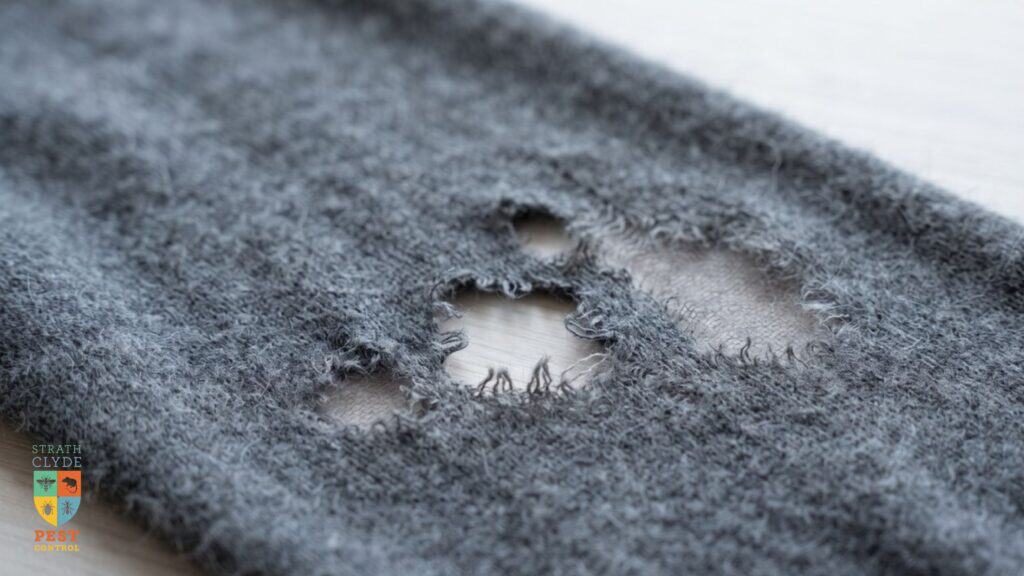
A clothes moth infestation is one of those problems that tends to reveal itself too late. By the time most people spot it, it has been going on for a while. That hole in the cashmere jumper you pulled out last winter — that was not there when you packed it away. The thin patch appearing at the edge of the living room carpet. These things do not happen overnight, and clothes moths are very good at staying out of sight until the damage is done. July and August tend to be when numbers peak across Glasgow and East Kilbride, which makes this a good time to know what you are actually looking for.
What You Are Actually Dealing With
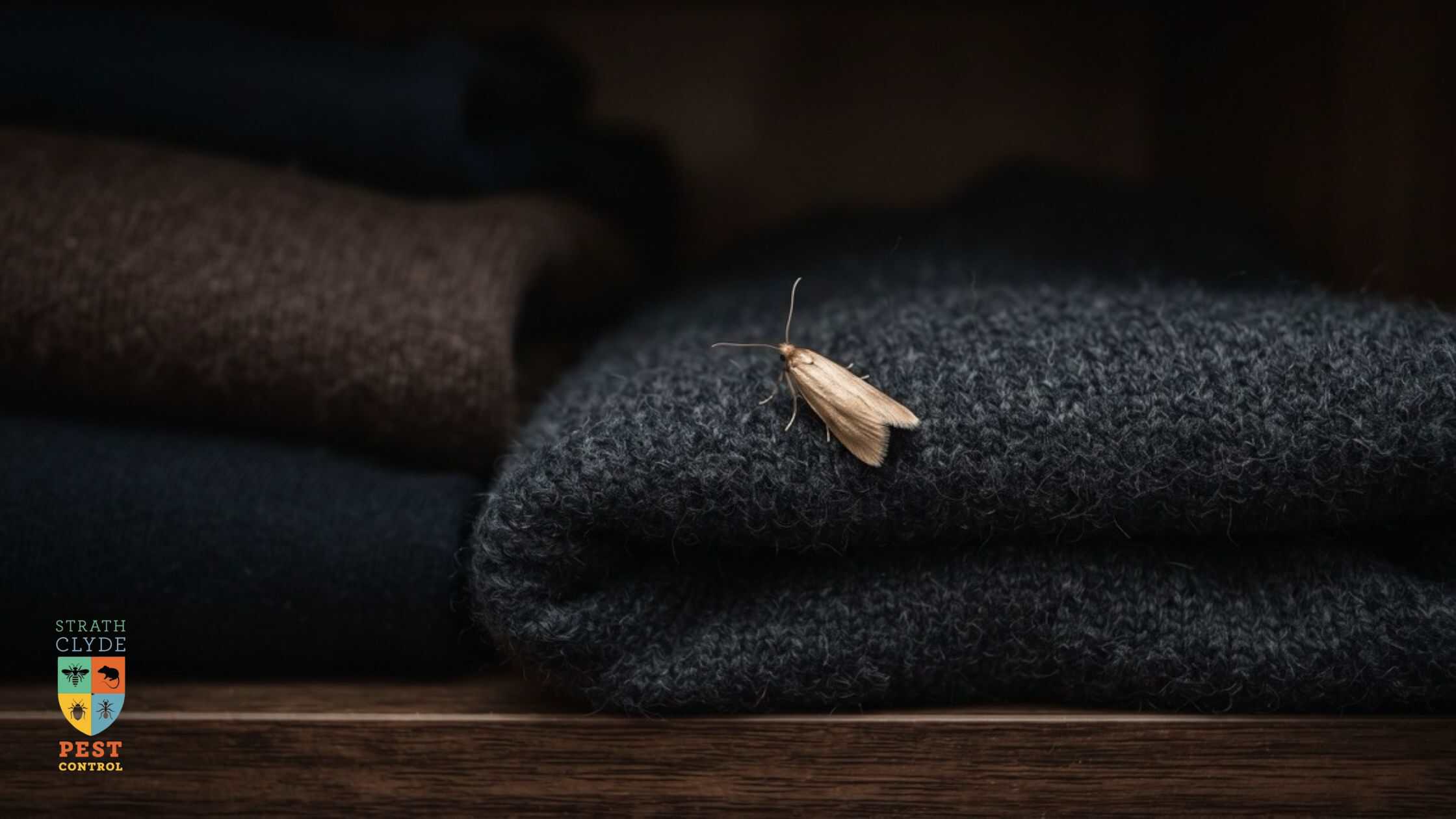
There’s one species you’re most likely to come across: the common clothes moth, also known as the carpet moth — Tineola bisselliella if you want the full name. It’s the one behind most of the damage people find in wardrobes and carpets alike. Tiny, buff-coloured, and very reluctant to fly toward light. It hides. Dark corners of wardrobes, behind drawers, under furniture, the edges and corners of carpets in rooms where heavy furniture sits undisturbed, anywhere undisturbed. The case-bearing clothes moth is a related but less common species that works in a similar way, carrying a small fibre case with it as the larvae feed. That case is actually one of the easier ways to tell them apart if you find one.
Both species target natural fibres: wool, silk, cashmere, feathers. Your synthetic fabrics are generally fine, though anything blended with a significant proportion of natural fibre is not necessarily safe.
The larvae are the ones doing the actual feeding, and they can keep going for months. A single female lays somewhere around 40 to 50 eggs before she dies, small enough that you’re very unlikely to spot them until something else gives the game away. That’s why these infestations tend to catch people off guard. Nothing looks wrong, and then suddenly it does.
Signs You Have a Moth Problem
Holes in natural fibre clothing are the obvious one, but by that point things are usually well underway. Earlier signs are worth knowing. Silk webbing in wardrobe corners or tucked into clothing folds. Tiny pupal cases in the seams of stored garments. Small, slow-moving moths on walls or ceilings — clothes moths do not dart around the way other moths do. And if you find small creamy larvae in carpet fibres or at the base of a wardrobe, that is a fairly reliable sign you need to act.
Pheromone traps placed in a wardrobe or storage area are worth having even if you have not seen any obvious signs yet. They catch adult males, which tells you whether moth activity is present before you find damage. Think of them as an early warning system rather than a solution on their own.
What Attracts Them to Your Home
It is not just the fabric — it is what is on the fabric. Unwashed wool, cashmere or silk sitting in a dark wardrobe through the summer is a much easier target than something freshly laundered. It is not just the fibre — it is what is on it. Sweat, skin, traces of food. That jumper you like but have not worn since March, shoved to the back of the wardrobe? Worth checking. Prime real estate.
Central heating is a bigger factor in Scotland than people realise. A well-heated home means moth activity does not die back in winter the way it would in a colder building. It just slows down. Numbers build quietly through spring, then peak in the warmer months alongside soft furnishings and carpets coming under more pressure from other textile pests too.
What to Try First
If you have caught it early — one or two moths, minor damage to a single item — there are things worth doing before calling anyone.
Take everything out of the affected wardrobe or drawer and vacuum thoroughly. Get into the corners, the edges, the crevices. Empty the vacuum bag outside immediately — do not leave it sitting in the machine. Wash affected clothing at as high a temperature as the care label allows, or send it for dry cleaning. Heat is reliable at killing eggs and larvae that washing alone might miss.
Cedarwood blocks and lavender sachets in storage spaces deter moths from settling, though they work better as a preventative than a fix once an infestation is already active. Clothes moth traps using pheromone pads catch adult males and reduce breeding. Moth killer spray applied to wardrobe interiors and carpet edges can deal with larvae directly. For items going into long-term storage, vacuum-sealed bags are worth using for anything made from natural fibres.
English Heritage deals with clothes moth infestations across some of the most significant historic properties in the country and their guidance on monitoring and treatment for wool and silk textiles is genuinely useful if you are dealing with valuable or vintage pieces.
When DIY Is Not Enough
The honest problem with DIY treatment is that it is hard to be sure you have got everything. Eggs are tiny. Larvae hide in places that are easy to miss — deep in carpet pile, inside the padding of upholstered furniture, tucked into the corners of storage spaces you did not think to check.
If the damage is in carpets across more than one room, or in soft furnishings, or if you have treated the problem and it keeps coming back, a professional inspection makes sense. A pest controller will identify all the affected areas properly and apply insecticide treatments that reach the spots DIY products tend to miss. Getting proper treatment in early is considerably cheaper than replacing a natural fibre carpet or a collection of damaged knitwear later.
Keeping Moths Out Long Term
Wash clothing before you store it — that removes what moths are actually attracted to. Vacuum the edges of carpets and under furniture regularly, not just the middle of the room where foot traffic keeps things disturbed. Check pheromone monitors in wardrobes with natural fibre clothing every few weeks — if numbers start climbing again you will know early. Wash things before storing them. Simple enough, but it cuts the risk significantly.
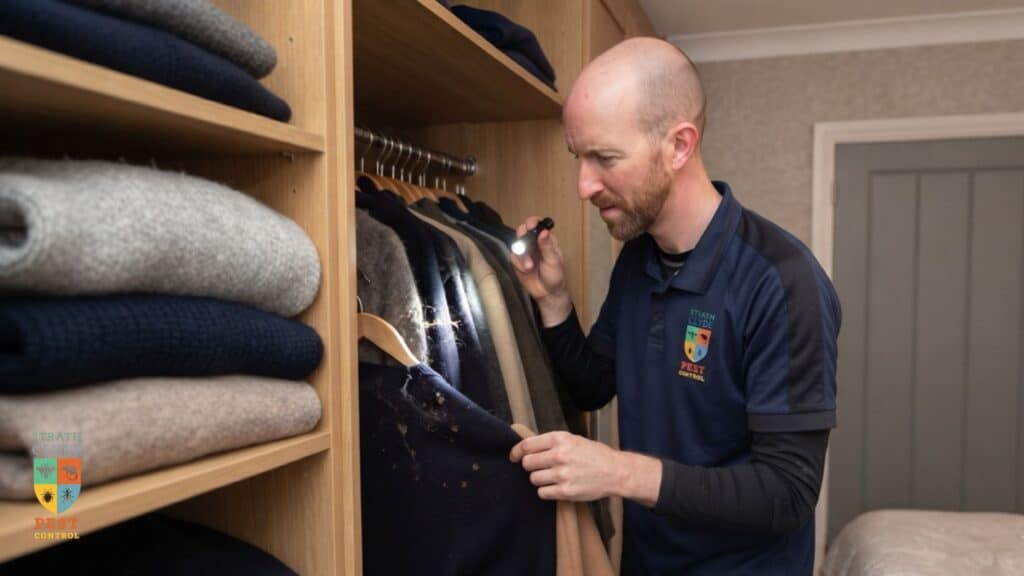
If you have spotted damage or live moths in your home across East Kilbride, Glasgow or Lanarkshire, get in touch with our pest control team and we will take a proper look.