Now they are at your barbecue, in your drink, circling the table while you are trying to eat outside. July and August is when wasps go from background noise to genuine nuisance, and there is a reason for it — one that actually makes them easier to deal with once you understand what is going on.
What Actually Changes in Summer
Wasps are not aggressive by nature. For most of the year they are focused on one thing — feeding the larvae. Worker wasps spend spring and early in the season hunting insects and caterpillars to feed the young back at the nest. The larvae repay them with a sugary secretion — it is basically the only sugar adult wasps can access while the colony is growing. That keeps them busy, purposeful and largely unbothered by humans.
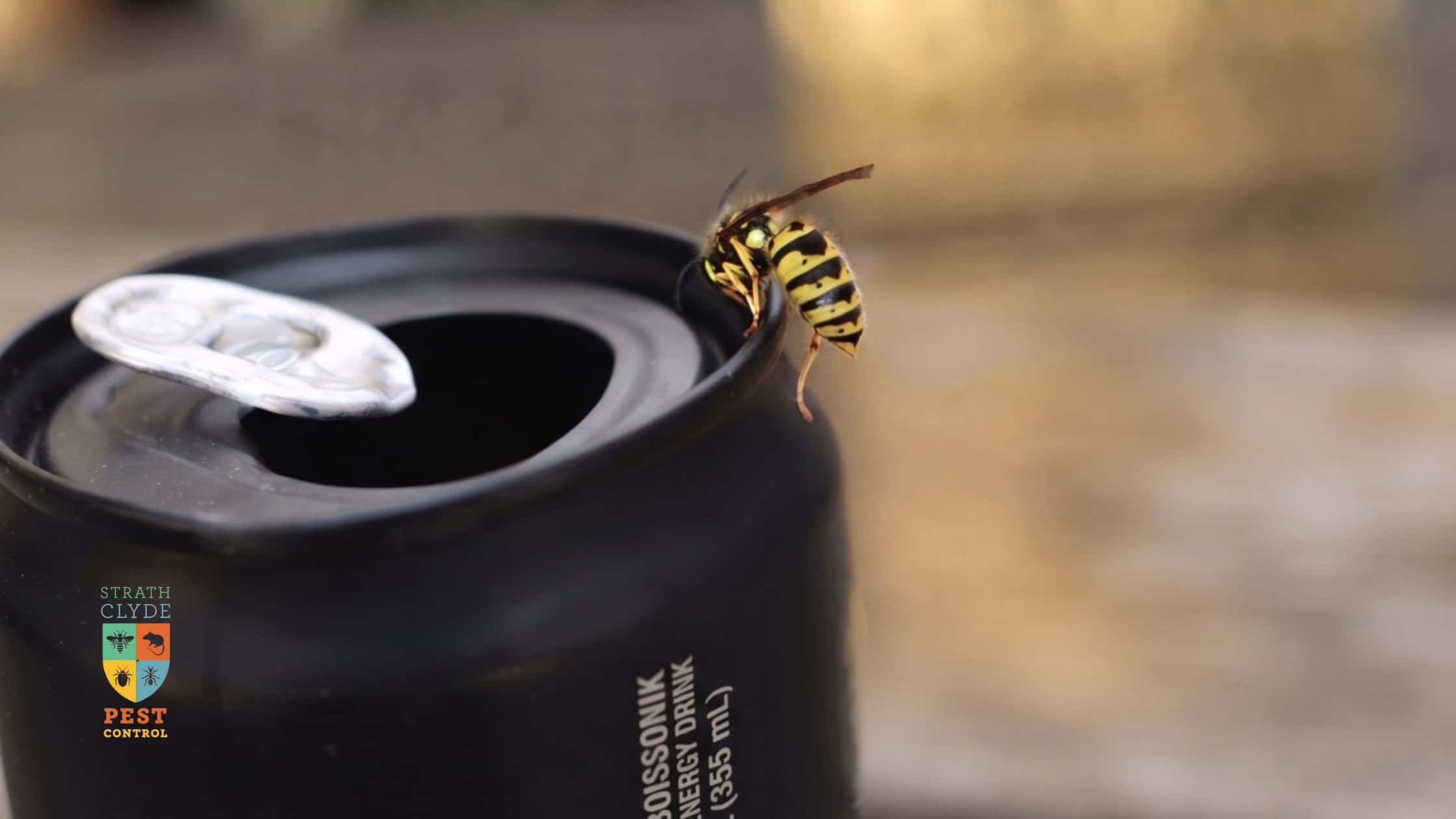
The problem comes when that arrangement breaks down. By July, most wasp nests have reached full size. The queen is still laying but the colony is no longer growing at the same rate. Fewer larvae means less of that sugary reward for the workers — and suddenly wasps that were perfectly content hunting insects start looking elsewhere for sugar. Your lemonade, your fruit, your rubbish bins, the recycling bins by the back door. All of it becomes fair game.
Why Are Wasps So Aggressive — The Science Behind It
It is not just that they are looking for food. The dynamic inside the nest changes too. Worker wasps become less purposeful and more erratic — some researchers describe this phase as a kind of furlough, where wasps that were previously task-focused have no clear role. That combination of food scarcity and behavioural restlessness is what makes late summer wasps feel so much more confrontational than the ones you barely noticed in May.
Alarm pheromones make things worse. When a wasp feels threatened it releases a chemical signal that tells nearby wasps to respond. In spring this rarely matters because wasp populations are smaller and nests are tucked away. By July a single nest can contain thousands of worker wasps, and squishing one near the nest entrance is a reliable way to find out exactly how many.
Where Wasps Are Nesting Around Your Home
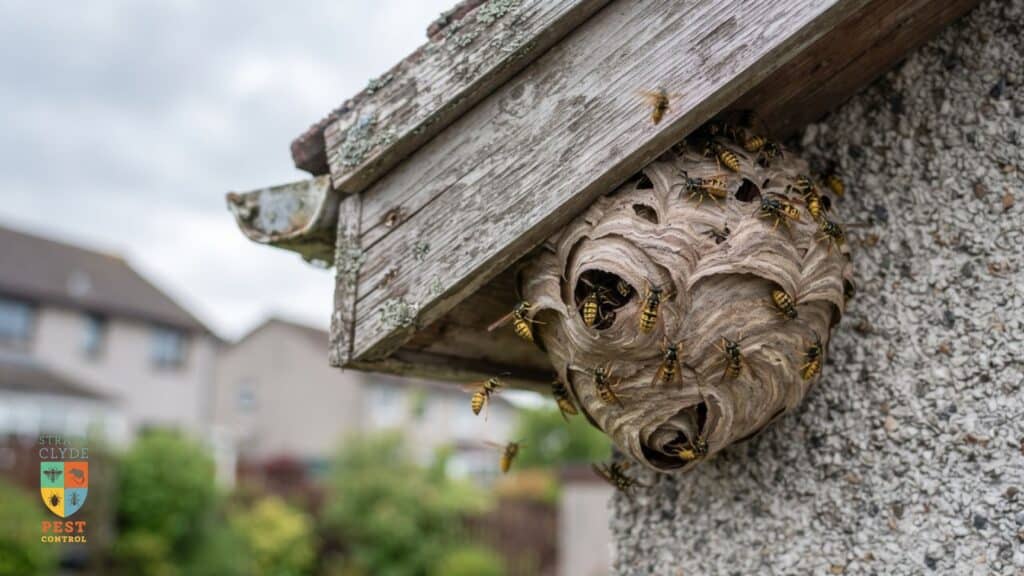
By July a nest that was golf ball sized in spring has become something considerably larger. Loft spaces, wall voids, garden sheds, under roof eaves and occasionally in the ground are all common spots across East Kilbride and Glasgow. Wall voids are particularly tricky because the nest can be well established before anyone notices — the entry point is visible but the nest itself is hidden inside the cavity.
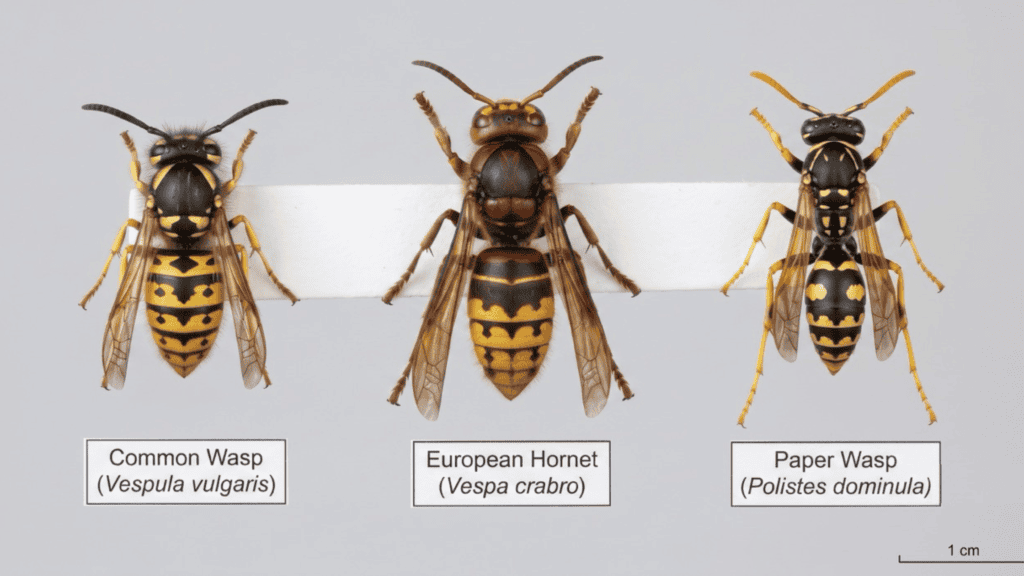
Papery nests in wall voids are particularly common in older properties and are harder to spot until the colony is well established. If you are seeing a steady stream of wasps going in and out of the same spot — particularly around eaves or a gap in brickwork — that is almost certainly an active nest. The European hornet is also worth mentioning, a larger relative of the common wasp that occasionally nests in similar spots and is sometimes mistaken for an Asian hornet, which remains a genuine invasive species concern across the UK.
What Attracts Them to Your Garden
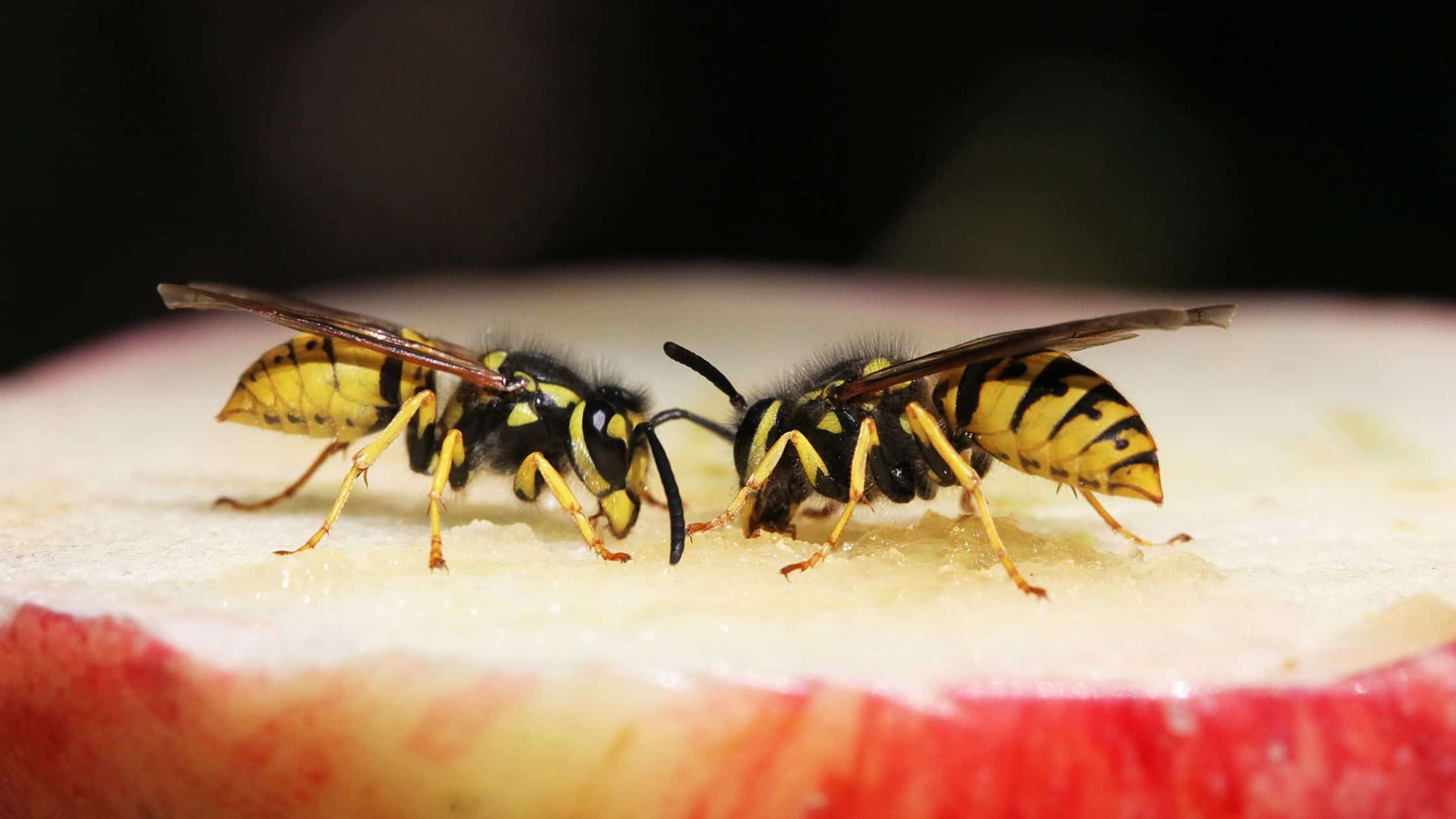
Rotting fruit is one of the biggest draws in July and August. Fallen apples, pears or plums fermenting on the ground are irresistible — the fermenting process produces the sugars wasps are actively hunting for at this time of year. Outdoor eating areas, uncovered sugary drinks and food left out on tables all add to the attraction.
Rubbish bins and recycling bins are worth thinking about too. Wasps are persistent once they find a food source, and an unsealed bin with food packaging inside is reliable enough to keep them coming back. Rinsing packaging before it goes in the recycling and keeping bin lids properly closed through summer genuinely reduces the attraction around the back of the house.
Standing water in the garden is also worth addressing — wasps use water sources and their presence near a nest can increase activity around your outdoor space.
When to Call a Professional
Most stings are painful but settle down quickly. For anyone with a known allergy it is a different picture — anaphylactic shock from a venomous sting is serious and anyone in that situation should treat any nearby nest as urgent rather than something to keep an eye on.
For everyone else the question is usually where the nest is. One tucked away at the far end of the garden away from doors and regular activity can often be left — wasp populations decline naturally through autumn and the nest will be empty by winter. A nest in a loft space, inside a wall void, or anywhere near a door or outdoor eating area is worth getting properly treated.
DIY sprays reach the entry point but rarely the nest itself — a pest controller treats the colony directly, which is what actually stops the activity rather than just disrupting it temporarily. The British Pest Control Association recommends professional treatment for any nest that poses a risk to people in or around the property.
If you have a wasp nest causing problems across East Kilbride, Glasgow or Lanarkshire, get in touch with our wasp control team and we will sort it.