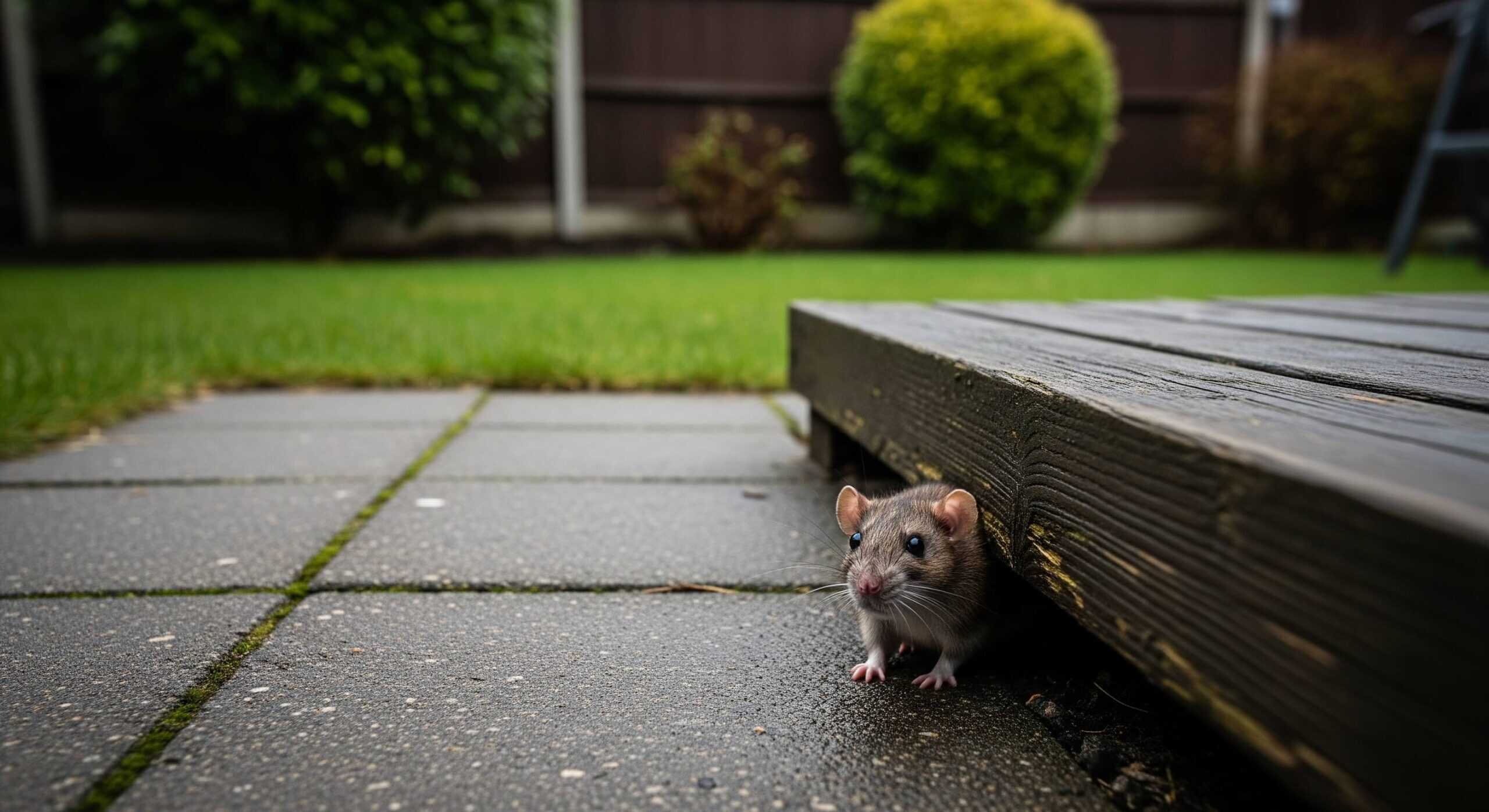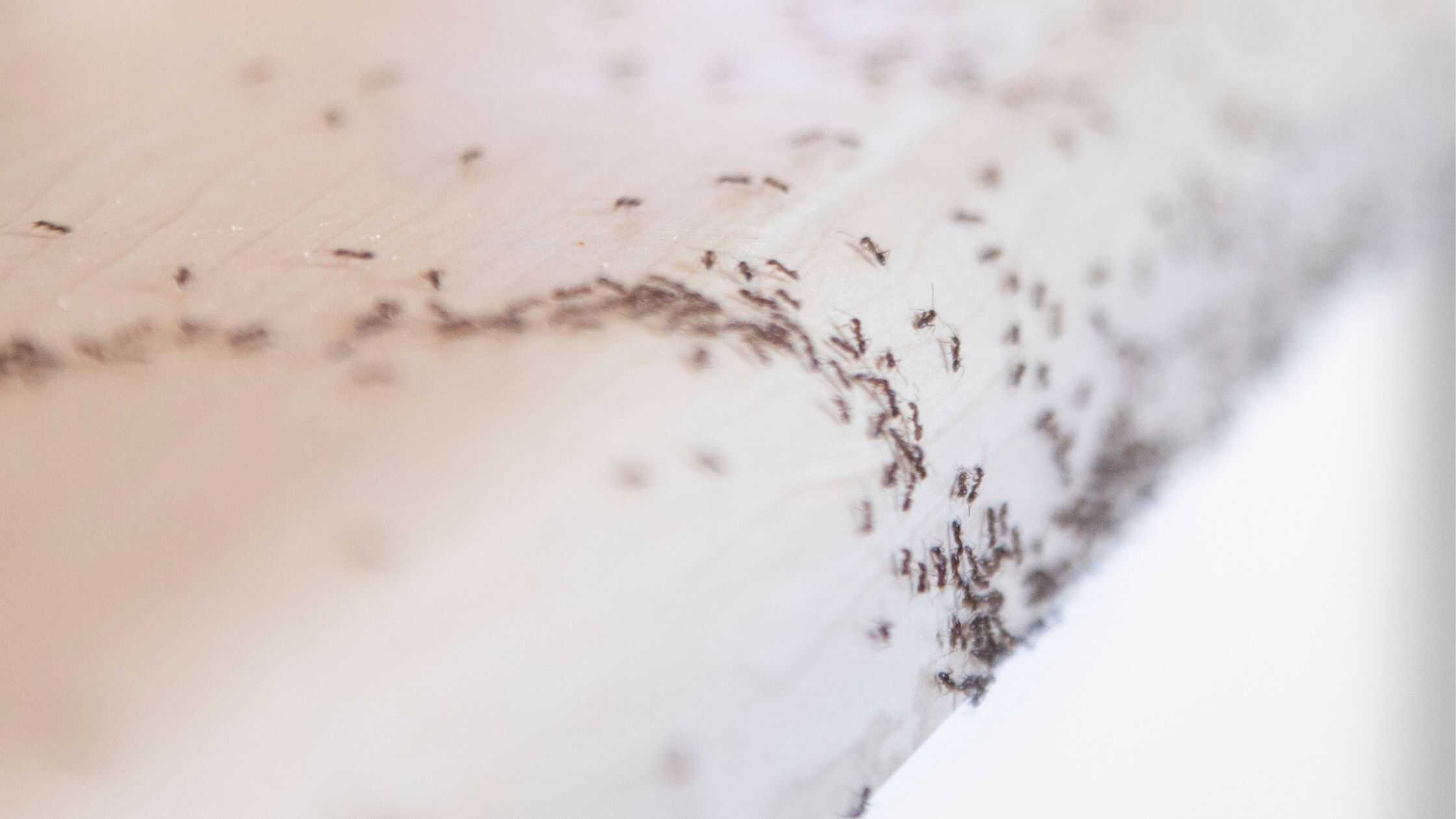
Knowing how to stop mice getting in before temperatures drop is far easier than dealing with an established nest — and September is exactly the right time to check. As temperatures drop, house mice start moving towards buildings looking for warmth and food, and the gap between a mouse-free home and an established infestation can be surprisingly small and surprisingly quick.
Getting ahead of it now is far easier than dealing with a nest that has already been established. Once they are in and settled, you are into treatment rather than prevention.
Why Autumn Is the Critical Window
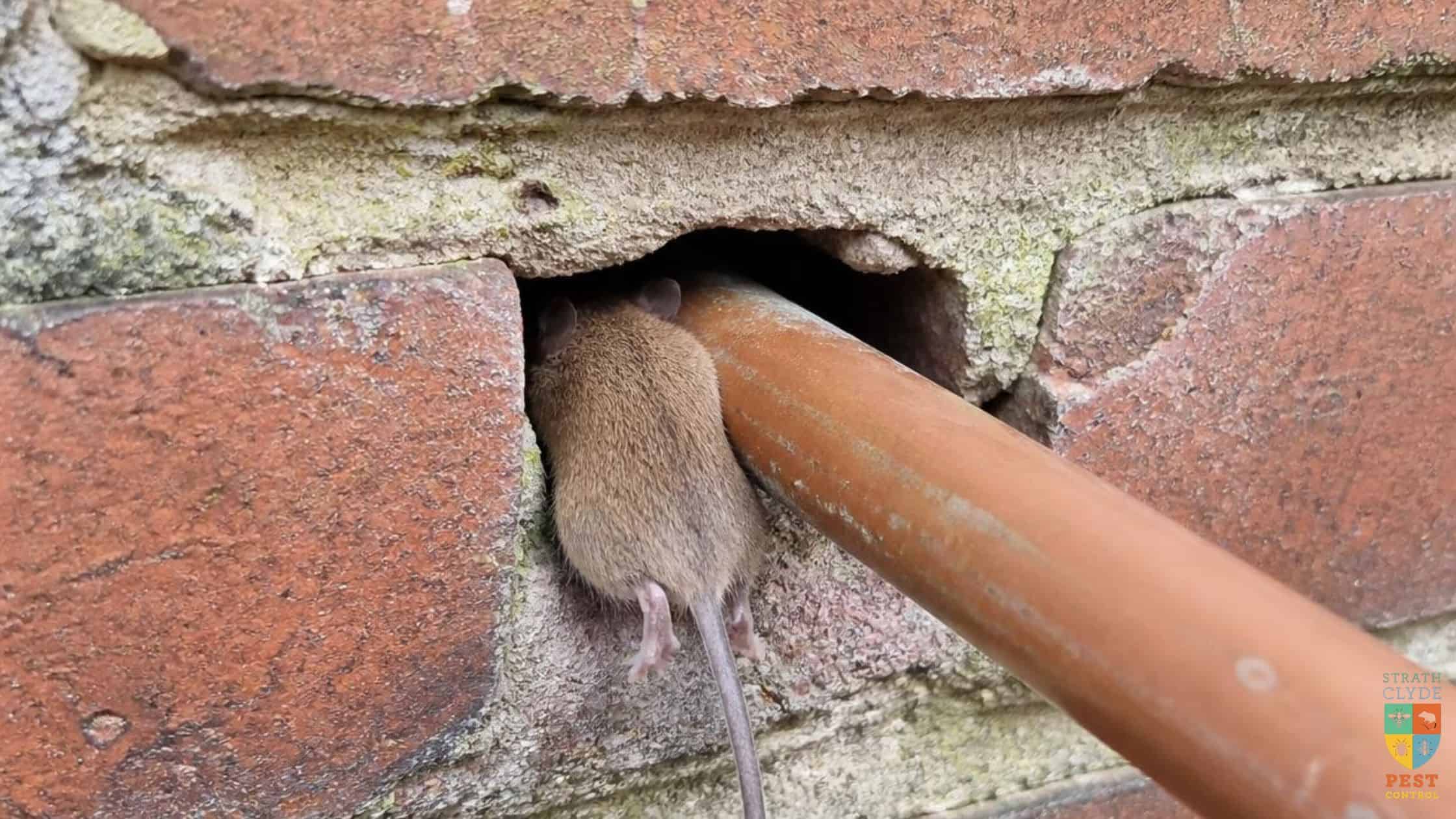
House mice do not hibernate. They follow food and warmth, and as outdoor sources dry up through September and October, they start pushing towards buildings. A mouse can squeeze through a gap of around 6mm — roughly the width of a pencil — so they need very little to find a way in.
Once inside, they establish runs and nest sites quickly. What starts as one or two mice in October can be a considerably bigger rodent infestation by December, particularly if they get into a loft or cavity wall where they are difficult to detect until the damage is done.
How to Stop Mice Getting In: The Entry Points to Check
The most common entry points in Scottish homes are not always obvious from the inside. Gaps around water pipes where they pass through external walls are a major one — the pipe fits neatly but there is usually a gap around it that is more than enough for a mouse. Vent openings, particularly older ones that have lost their mesh, are another. Door gaps at the base of back and side doors, roofline joins where soffits meet the wall, and gaps around utility cables all get overlooked regularly.
Cavity walls in older properties across East Kilbride and Glasgow create internal corridors once a mouse is inside. They will travel long distances within a building without ever appearing in a room.
How to Block the Key Entry Points
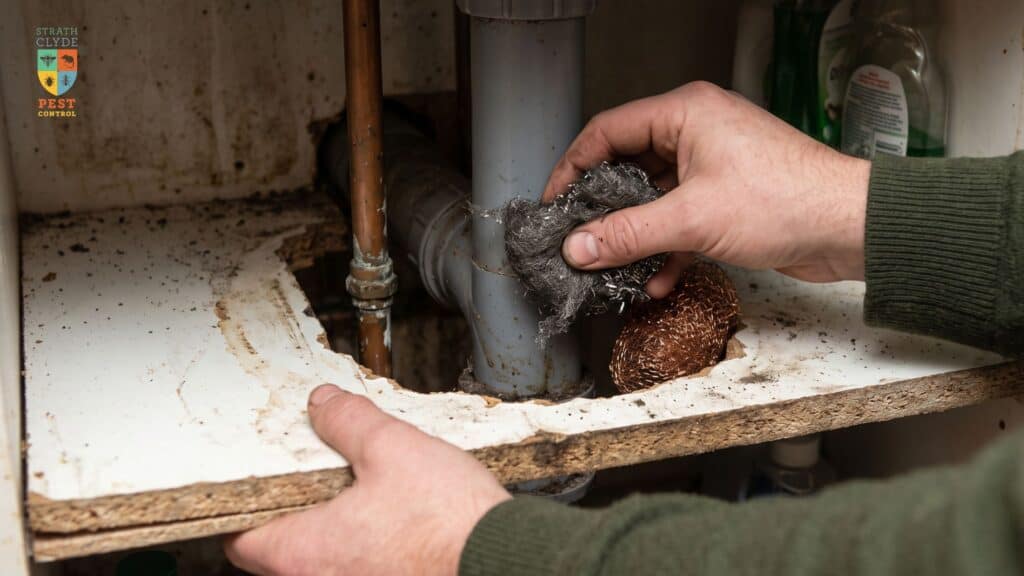
Steel wool packed tightly into gaps is one of the most effective materials for mouse proofing because mice cannot chew through it. It works best used alongside a sealant or filler to hold it in place — steel wool alone can be pushed out. Work around every pipe penetration on the external walls, check under kitchen and bathroom units where pipes enter the floor, and inspect the base of exterior doors for daylight showing underneath.
Vent openings should be covered with fine galvanised mesh that still allows airflow — blocking them fully causes damp problems, so the ventilation needs to stay while the gap is closed. Roofline joins and soffits are worth checking from outside; even a small gap at the join is a straightforward entry point for mice coming in via gutters or climbing plants.
Reducing What Draws Them In
Sealing entry points is the most important step, but reducing what attracts rodents inside makes the whole approach more effective. Food left accessible overnight is a significant draw — this includes pet food, bird seed stored in garages, and anything in soft packaging in kitchen cupboards. Switching dry goods to metal or glass containers and keeping pet food bowls empty overnight makes a real difference.
Loft clutter is worth addressing too. Cardboard boxes and stored fabric provide ideal nesting material, and a loft that goes unchecked can support a mouse nest for months before anyone notices. Swapping to sealed plastic storage boxes and clearing out what is not needed removes both the appeal and the hiding places.
Signs the Problem Has Already Started
Droppings, scratching sounds in the walls or loft at night, gnaw marks on food packaging or cables — any of these and you are past the prevention stage. One mouse you can see usually means several more you cannot. Baited traps on the runs they are already using, alongside closing the entry points, is what is needed at that point — not one or the other.
When to Call a Pest Controller
DIY trapping knocks numbers back but rarely clears a problem on its own. Same mice reappearing in the same spots, or activity showing up in new areas — that is when to bring someone in. We cover mouse and rat control across East Kilbride, Glasgow and Lanarkshire. Every job starts with finding where they are getting in, not just treating what is already there.
Get in touch and we will come and take a look.