Every September, house spiders in autumn suddenly become impossible to ignore. Big ones, crossing the floor at speed, appearing in the bath, turning up in corners they were not in last week. Every year it catches people off guard, and every year the calls and messages start coming in asking what is going on.
The answer is fairly straightforward, and it probably is not what most people expect.
Chances are, the majority of those spiders have been in your home for months. You just have not been seeing them.
Why House Spiders in Autumn Appear More Often Indoors
Most people assume spiders come inside in autumn to escape the cold. For the majority of UK species, that is not how it works. They were already there — tucked into wall cavities, behind furniture, underneath skirting boards, in corners of rooms that do not get much attention. If you are scared of spiders try not to think about this too much….
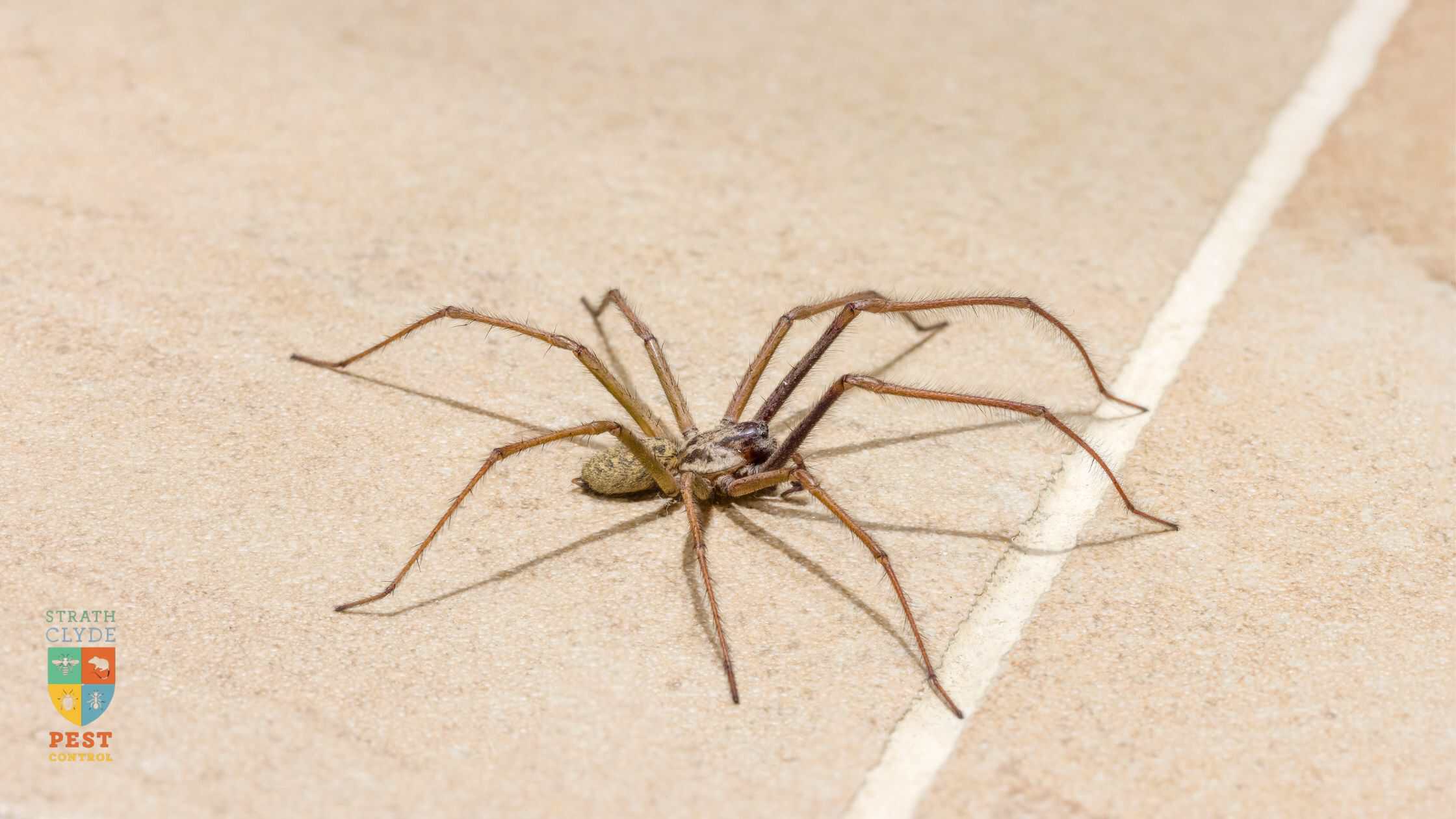
What changes in September is their behaviour. Spider season in the UK is essentially mating season, and it kicks off in earnest from early September. Male house spiders — particularly the giant house spider (Tegenaria species), the large fast-moving one most people encounter — spend the warmer months living quietly in their webs and keeping out of sight. Come September, male house spiders start wandering in search of females. They move fast, they cover ground, and they end up in places that make them very hard to miss — crossing the living room floor, sitting on window sills, or dropping into the bath and finding they cannot get back out.
Female spiders do not move around in the same way. They stay in their webs and wait. The ones doing the roaming are almost always males.
It peaks in September and runs through to mid-October, at which point things settle down on their own. The UK spiders you encounter in your East Kilbride or Glasgow home during this period are almost certainly Tegenaria species — native, harmless, and actually quite useful for keeping flies and other insects down.
Which Spiders Are Actually Worth Worrying About?
For most homes in Scotland, probably none of the ones you are finding.
The giant house spider and the cellar spider — sometimes called the daddy longlegs spider, the one with the long thin legs that hangs in the corner — are both harmless. Leave them to it, honestly. They eat flies, moths and whatever else blunders into a web, and you will rarely know they are there.
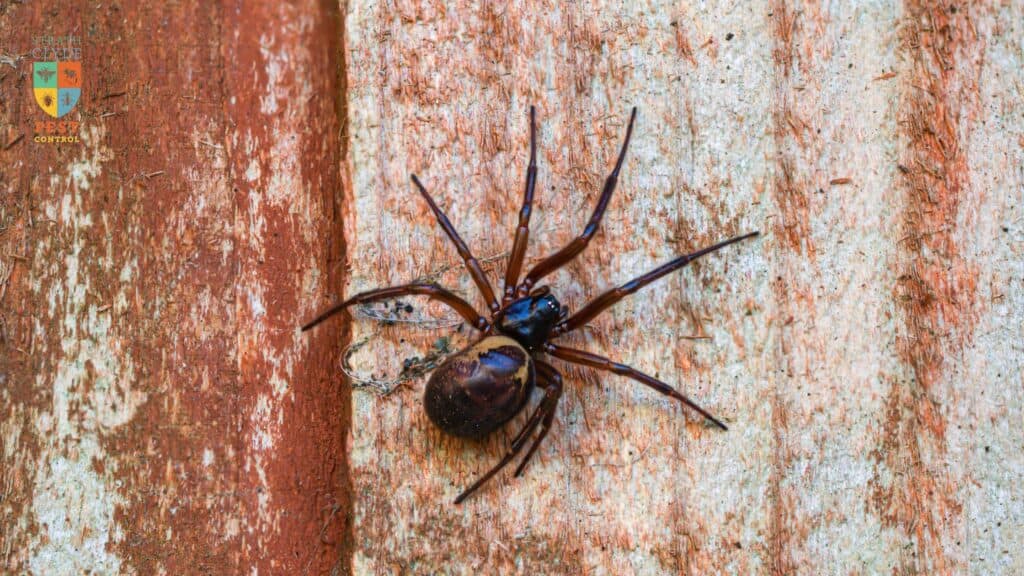
The noble false widow (Steatoda nobilis) is a different story, though it is far more of an issue in southern England — in Scotland it turns up much less often. Stockier than a house spider, dark-bodied, with pale markings on the abdomen. It will bite if it feels cornered or gets handled, and that bite can be fairly sore — localised pain and swelling that can last a day or two. Not dangerous for most people, but not pleasant either. Anything you cannot confidently identify, leave it alone and ring us.
The species that tend to worry people most — black widow, brown recluse — are not native to the UK. Very occasionally something unusual turns up in imported packaging or goods, but it is genuinely rare and not something most households need to think about.
How to Reduce Spiders in Your Home This Autumn
If you would rather have fewer of them around, a few things genuinely help.
Regular hoovering makes a real difference — get under furniture, along skirting boards, and into the corners that tend to get left. It breaks up webs and removes egg sacs before anything develops. Garages and sheds are worth doing too. They get left alone for weeks at a time and spiders make themselves very comfortable in them.
Check window sills and window frames while you are at it. Sealing gaps around frames, door edges and where pipes come through walls cuts down on the insects spiders feed on — deal with what attracts the prey and you reduce what attracts the spiders.
Outdoor lighting is another one worth thinking about. Lights around doors and windows pull in flies and moths, and where the insects go the spiders follow. Yellow-tinted bulbs or ones on motion sensors around the main entry points reduce that considerably.
Peppermint oil and white vinegar come up constantly online. There is a bit of evidence behind the peppermint — some studies found spiders avoided treated areas — but it wears off quickly and is not something to rely on. Use it alongside the other things, not instead of them.
When Is It Worth Calling a Professional?
Most people will not need a pest controller for spiders — the season is short and it sorts itself out.
But if you suspect a false widow infestation then give us a call.