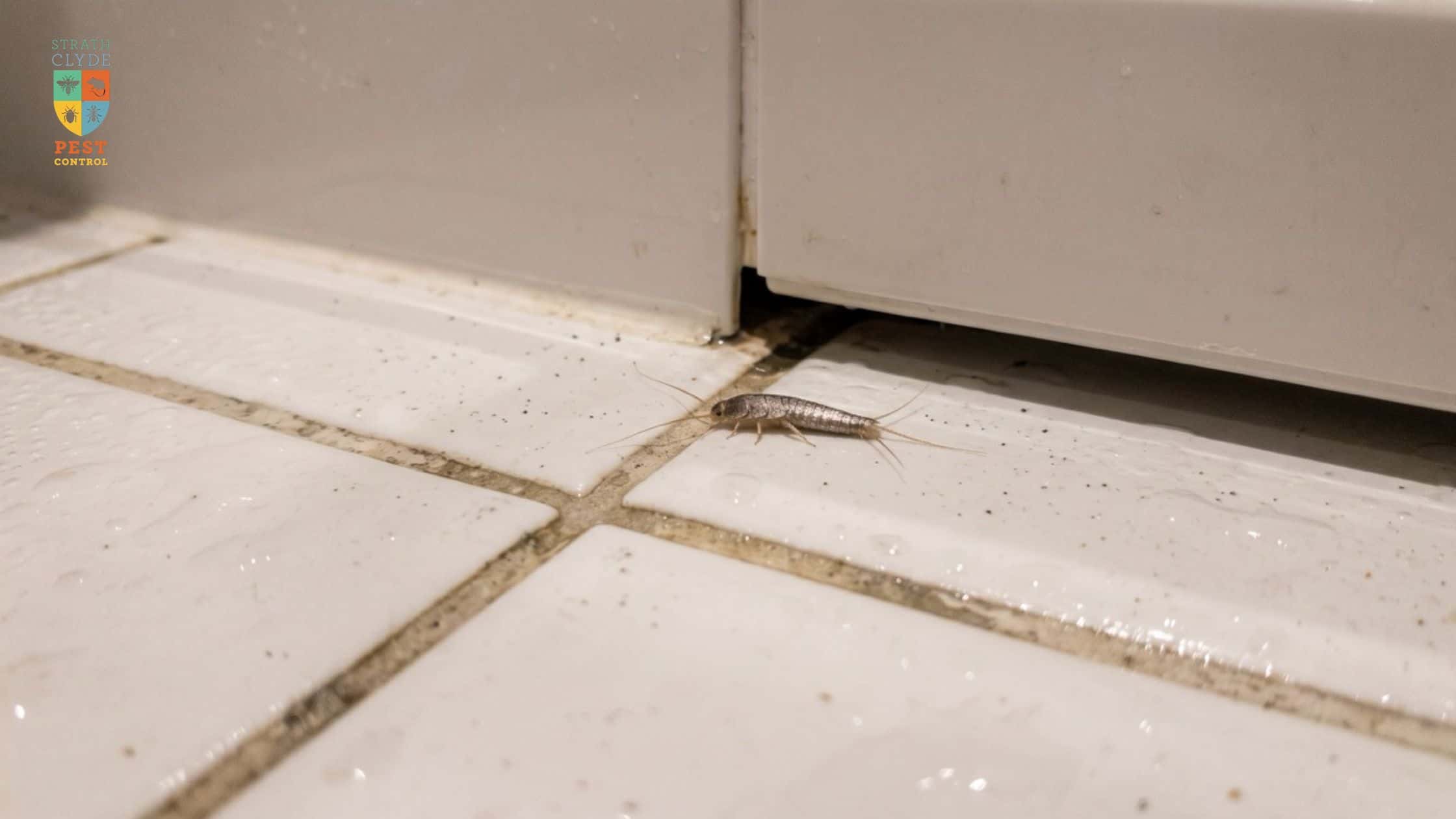
You switch the bathroom light on late at night and something small and silvery shoots across the floor and under the skirting. It’s gone before you’ve had a proper look. Chances are, that was a silverfish. We don’t get called out for them often across East Kilbride, Glasgow and Lanarkshire. When we do, though, there’s usually damp somewhere, and a room that never really dries out.
What Are Silverfish?
Small, wingless, and very old. Silverfish have been around in some shape or form for a very long time and long before anyone was building bathrooms for them! The body is flat and tapers to a point, covered in fine scales. Two long antennae up front. Three bristly, tail-like appendages at the back. And they don’t walk so much as wriggle, a bit like a fish darting off, hence the name. They’re nocturnal insects too, which is why you’ll nearly always see one at night and hardly ever during the day.
Common Silverfish and Grey Silverfish
In UK homes you’re likely to meet one of two. The common silverfish, Lepisma saccharinum, is the shiny silver one, about 10 to 15mm long. Then there’s the grey silverfish, Ctenolepisma longicaudata. It’s bigger, duller in colour, and its antennae and tail bristles are noticeably longer. English Heritage’s guidance on silverfish says the grey one is a fairly new arrival in the UK, it’s spreading fast, and it can breed at lower humidity levels than its cousin. So a dehumidifier won’t always win the fight by itself. There’s also the firebrat, Thermobia domestica, which likes it warm, think boiler cupboards, but you’d be unlucky to find one in a house.
Are Silverfish Harmful?
Not to people. No bites, no stings. Your stuff is a different story. They live on starchy food and anything with starch, sugar or glue in it, so wallpaper paste, old book bindings, photos, cardboard boxes and the paperwork you’ve shoved in a damp cupboard are all fair game. An open bag of flour or cereal will do nicely too. Leave a big population long enough and you’ll find papers and wallpaper scratched thin or dotted with little holes. Is your house dirty if you’ve got them? No. Damp, more likely.

Signs of a Silverfish Infestation
Seeing them is the giveaway, usually at night in a bathroom, kitchen or under-stair cupboard. Look closer and you might find cast skins, which are tiny papery silver flakes, or droppings that look like someone’s spilt ground pepper. Paper and wallpaper can pick up yellowish marks or rough, thinned patches, and books or boxes can end up with holes chewed in them. In the day they tuck themselves into cracks and crevices. Behind skirting boards, under loose tiles, round water pipes, behind the bath panel. That’s where we’d look first.
Why Scottish Homes Suit Silverfish
They need moisture to breed. Scotland isn’t short of it. Through the winter the windows are shut, the heating’s on, and every shower, pan of soup and load of washing on the airer adds more water to the air with nowhere to go. Plenty of Glasgow tenement flats have an internal bathroom with no window, and if the extractor fan’s weak or packed in, the room can stay steamy for hours. Add a slow drip under the sink or damp corners behind the bath, and silverfish have water, food sources and hiding spots all in one place.
Silverfish or Woodlice?
They get mixed up because they show up in the same damp spots, but they’re not related. A woodlouse isn’t even an insect. It’s a crustacean, closer to a crab than a beetle, grey and armoured with a lot of legs. Woodlice live outdoors under logs and leaf litter and come in through gaps under doors or round pipes, usually after a wet spell. Most don’t last long inside, because they dry out. Silverfish are the opposite. They’re quite happy living and breeding indoors. What they share is damp conditions, so if you’re seeing either, check for moisture and gaps. We don’t treat woodlice as such, but simple proofing to close up the gaps they’re getting in through is something we can do.
How to Get Rid of Silverfish
Bring the Humidity Down
Start here. Ben’s advice is to get the room below 60% humidity with a dehumidifier, which really helps stop silverfish breeding. Fix dripping taps and leaking water pipes. Leave the extractor running after a shower and the door open afterwards. Put dry food into airtight containers, and get boxes of paperwork out of damp cupboards.

Do Home Remedies Work?
You’ll find plenty of home remedies online: cedar shavings, cinnamon oil, citrus spray, silica gel packets, essential oil sprays. Some may put silverfish off an area for a while, but none of them deal with the damp that’s causing the problem, and none will clear an established infestation. Supermarket insect spray tends to have the same issue. It kills what it touches, but silverfish spend most of their time tucked away in gaps you can’t reach.
When You Need Professional Silverfish Control
Silverfish aren’t something we’re called out for every week, but Ben treated a silverfish problem just recently, and his view is the same each time. Reducing the humidity helps a lot, but quite often it needs a treatment as well to get on top of it. We use edible insecticide gels rated for silverfish, placed in the cracks, crevices and hiding spots where they live. That’s especially important with grey silverfish, which can cope with drier conditions. A proper inspection first means we find where they’re hiding and what’s keeping the area damp, rather than just treating what you can see.
Need Help With Silverfish in East Kilbride or Glasgow?
If you keep seeing silverfish and drying the room out hasn’t sorted it, get in touch. Ben will come out, find where they’re coming from, tell you straight what’s causing it and treat it properly. We cover East Kilbride, Glasgow and the rest of Lanarkshire, and we’re a TrustMark registered, NPTA member business. If you’re renting and damp is behind it, our guide on pest control landlord or tenant responsibility explains who should be dealing with it. Have a look at our pest control services or contact us to book a free site survey.