
We get this one a lot. A tenant spots mouse droppings under the sink and isn’t sure if it’s their problem or the landlord’s. A landlord gets a call about wasps in the loft and wants to know if they’re actually on the hook for it. Pest control landlord or tenant responsibility trips a lot of people up, and the honest answer is that it depends on what caused the problem. There are clear rules of thumb that cover most of what we see across East Kilbride, Glasgow and the rest of Lanarkshire, and with Awaab’s Law now in force in Scotland, landlords have firmer deadlines for some of the issues that go hand in hand with pests. Most tenancy agreements don’t spell any of this out in useful detail, so it’s rarely as simple as checking the lease agreement and finding your answer in black and white.
When It’s the Landlord’s Responsibility
The general principle in Scotland is straightforward: if a pest problem exists because of something to do with the fabric of the building, fixing it usually falls to the landlord. Damp, a leaking pipe under the bath, a broken drain, loose roof tiles, gaps round skirting boards or floorboards. These are structural defects and pest entry points at the same time, and they let pests in however tidy the tenant is. Shelter Scotland is clear that a landlord has to deal with pests caused by repair problems. That covers most of the rat control and mouse work we do in rented homes, and wasps nesting in a loft or under the eaves usually come under the same banner of general building maintenance. A landlord is also expected to keep the property in good repair throughout the tenancy, not just on the day the keys are handed over, so a defect that develops partway through, and any vermin infestation that follows from it, is still theirs to put right.
When It’s the Tenant’s Responsibility
The other side of it is simpler than people expect. When the pests have come in with the tenant, the bill usually goes to the tenant. Bed bugs are the classic one. Somebody comes back from a holiday or picks up a cheap headboard second-hand, and a few weeks later they’re getting bitten. Fleas are similar: a dog or cat that’s missed its flea treatment is normally where they’ve come from. Poor hygiene comes into it as well. Bins left to overflow, food sitting out, bags of rubbish dumped in the back court. None of that is a fault with the building, so it’s hard to pin on the landlord. In tenement closes it can get awkward, because one flat’s bin habits end up being everyone’s problem. Whatever the cause, tenants are expected to report things quickly. Check what your tenancy agreement says about repair requests, but as a rule, the earlier you tell someone, the smaller the job.
What Awaab’s Law Means for Landlords in Scotland
You might have heard of Awaab’s Law on the news. It’s named after Awaab Ishak, who was two when he died in 2020. His family’s housing association flat in Rochdale had a serious mould problem that had been reported and not fixed. Scotland now has its own version. It came into force on 6 October 2026 and covers private landlords as well as social landlords and housing associations. If a landlord is told about damp or mould, or spots it themselves, they’ve got 10 working days to investigate. After that there are deadlines for writing to the tenant with what they found and for getting repairs started.
Pests aren’t part of the Scottish rules yet. Just damp and mould. England is going further: from 30 November 2026, social landlords there will have fixed deadlines for pest problems too. Whether Scotland follows is one to keep an eye on. In practice the two overlap anyway. Damp conditions and leaking pipes give rats and mice water. A bathroom with no window and a broken extractor fan is exactly where we find silverfish. Sort the mould and damp, and quite often you’ve sorted the pest problem before it starts.
Common Pests We’re Called Out to in Rented Properties
We see a fairly predictable handful of pests coming up again and again in rental properties across East Kilbride, Glasgow and Lanarkshire, and most of them trace back to one of the two causes above.
Rats and Mice
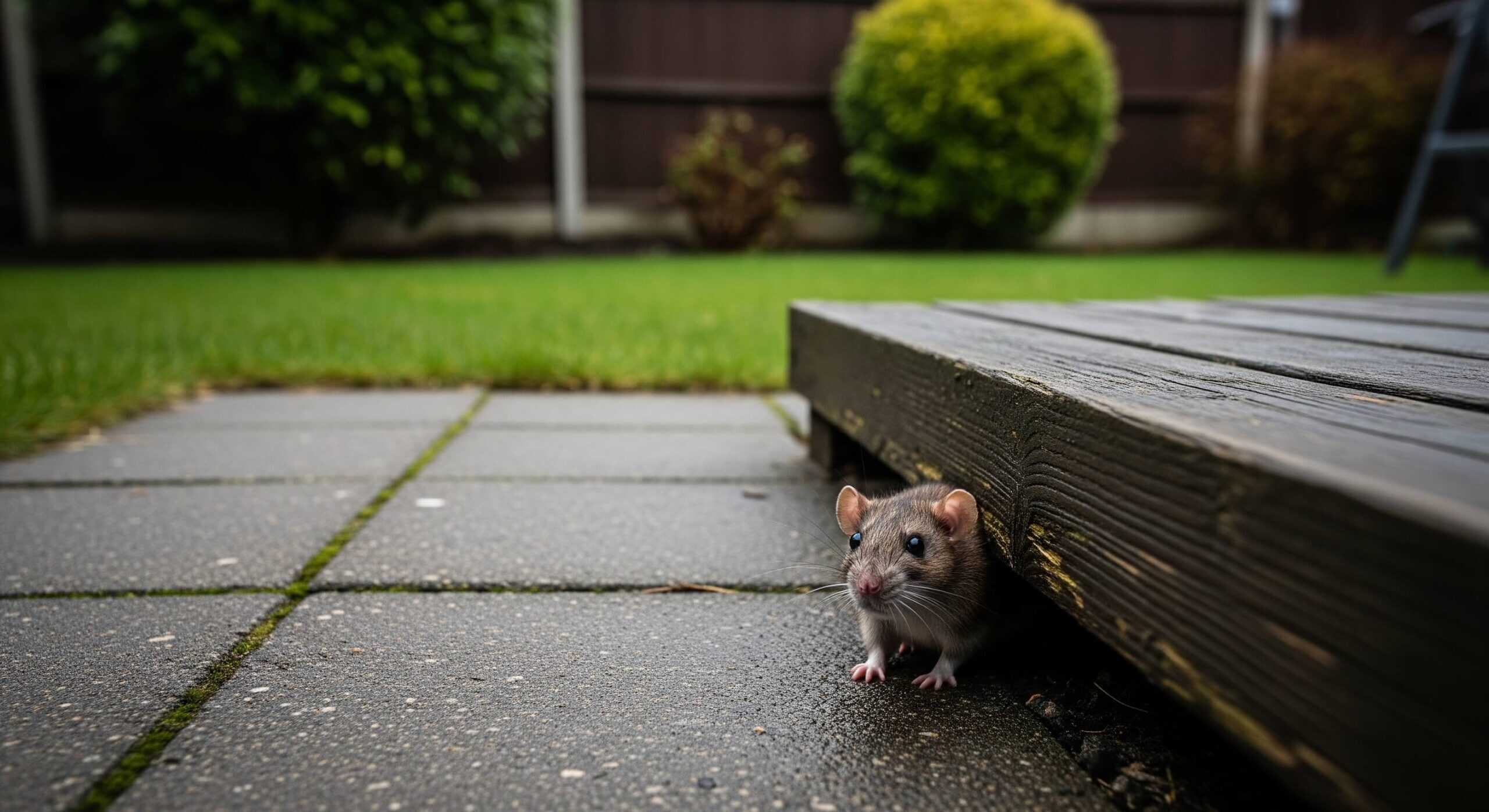
A rodent infestation makes up a big share of our work in rented homes, particularly older tenement flats and cottages with more ways in than a newer build. Beyond the nuisance, rats and mice cause real damage once they’re inside: chewed skirting boards, insulation pulled apart for nesting, and electrical wiring gnawed through, which is as much a fire risk as a pest one. We’d steer clear of relying on ultrasonic repellents or off-the-shelf traps and poison bait. They might reduce numbers for a week or two, but professional pest control means finding and closing the entry point, and in rented properties that’s often a broken or open-ended drain pipe rather than a gap you can see from inside. Because that’s a fault with the building, the repair and the pest proofing are usually the landlord’s to cover.
Wasps
Wasps turn up every summer whoever owns or rents the place. We’ve removed nests from lofts, sheds and eaves in spotless houses, so it has nothing to do with how tidy anyone’s been, and because nests usually sit in the roof space or the structure of the building, the landlord would normally cover it. A nest left because each side assumed the other would sort it only gets bigger and more dangerous to deal with, so this is one case where we’d say get it treated first and settle who’s paying afterwards. Wasp control call-outs peak between June and September across East Kilbride and the wider Lanarkshire area.
Bed Bugs and Fleas
Bed bugs and fleas are the two pests where responsibility most often lands with the tenant. Bed bugs travel in on luggage, clothing and second-hand furniture, and fleas usually arrive on a pet, so if they’ve come in with the current occupant it’s generally theirs to pay for. Not always, mind. We’ve seen bed bugs left behind by the last tenant in a furnished flat, and we’ve seen them wander through from next door. Report them early and it’s far easier to trace. Our treatment uses a long-lasting residual insecticide. We don’t do heat treatments.
What to Do If You Spot a Pest Problem
Don’t sit on it. Droppings, scratching behind the plasterboard, a funny smell, noises at 3am. Any of those is worth a phone call. A pest infestation doesn’t get cheaper the longer it’s left, and that’s true whether you own the place or rent it. Tenants, tell your landlord or letting agent, and do it by email or text so it’s dated. Most of the time that’s enough to get someone out to look.
Landlord gone quiet? You’ve got options. The environmental health department at your local council can send an environmental health officer round. If it’s bad enough to be a statutory nuisance, they can serve an enforcement notice and the landlord has to act. Private tenants can also take it to the First-tier Tribunal for Scotland (Housing and Property Chamber) if the home isn’t meeting the Repairing Standard. Whichever way it goes, get a proper pest control contractor in. Supermarket sprays won’t find the hole they’re coming through.
Why a Written Pest Report Matters for Landlords and Tenants
This is the part people don’t think about until they actually need it. When we carry out a site survey, we put together a written report confirming what we found, what’s most likely caused it, and what treatment has been carried out. That’s genuinely useful for both sides of a tenancy. A landlord can use it to show a problem has been dealt with properly and promptly, which matters for landlord insurance and their own records, and with Awaab’s Law timescales now in place for damp and mould, dated evidence of action counts for more than it used to. For tenants, it’s handy at the end of a let. Arguments over the security deposit get messy fast, and a dated report beats “it was like that when I moved in”. Renting from a housing association? Registered Social Landlords come under the Scottish Public Services Ombudsman, so if a complaint goes beyond the landlord, our report is something you can put in front of them. It’s an outside opinion from someone who looks at gaps under back doors for a living.

Need Pest Control for a Rental Property in East Kilbride or Glasgow?
Landlord or tenant, if you’ve got pests in a rented property anywhere in East Kilbride, Glasgow or Lanarkshire, give us a ring. Ben will come out, find out what’s going on and tell you plainly what’s caused it. Rats up from a broken drain, a wasp nest in the loft, bed bugs that came back from someone’s holiday: we deal with all of it. We’re TrustMark registered and NPTA members, so our reports hold up if things get formal, and we’ll talk you through pest proofing as well as treatment. Have a look at our pest control services or contact us to book a site survey.